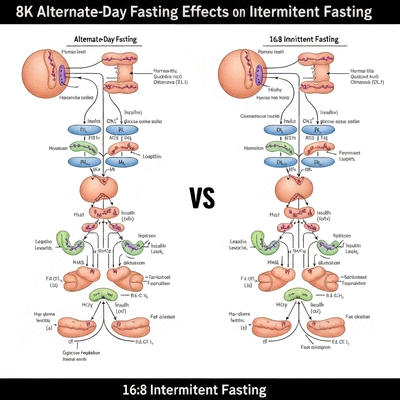
Alternate-Day Fasting (ADF)
- ✓ Full 24-hour fasting periods
- ✓ Very low caloric intake on fasting days
- ✓ Significant weight loss, improved insulin sensitivity
- ✓ May preserve muscle mass
Intensive Metabolic Impact
What if a simple change in your eating patterns could optimize your health? Research shows that fasting methods like Alternate-Day Fasting and the 16:8 approach don't just help with weight loss; they also enhance metabolic health and insulin sensitivity. The choices you make today can lead to significant health improvements tomorrow.
Delve into the core differences between Alternate-Day Fasting (ADF) and 16:8 Intermittent Fasting to determine which approach best suits your health and lifestyle goals. For a deeper dive into the mechanics of fasting's role in insulin sensitivity, explore our detailed guide.
Fasting can be a fascinating approach to improving our health and wellness. At Fasting Mechanics, we explore various methods, including Alternate-Day Fasting (ADF) and the 16:8 Intermittent Fasting method. Both are popular strategies that can offer unique benefits for those looking to enhance their metabolic health.
Understanding these fasting techniques begins with grasping their fundamental principles. In the coming sections, I will break down what ADF and 16:8 entail, and how they can fit into your lifestyle.
Alternate-Day Fasting involves cycling between fasting and eating days. On fasting days, you either consume very few calories or none at all, while on eating days, you can eat normally. This approach can lead to significant weight loss and improvements in metabolic health.
Many find ADF appealing because it can be easier to adhere to than traditional calorie restriction. However, individual experiences may vary, and it's essential to consider personal health conditions before starting.
The 16:8 method is another popular fasting strategy where you fast for 16 hours and eat during an 8-hour window. This is often done by skipping breakfast and eating between noon and 8 PM. It's a flexible approach that fits well into many people’s lifestyles.
With 16:8, the focus is on when to eat rather than what to eat, which can make it a more sustainable option for many. Imagine enjoying your favorite lunch without constantly worrying about calorie counts!
While both ADF and 16:8 can be beneficial, they differ significantly in structure and approach. Here’s a quick comparison to highlight their main contrasts:
In choosing between these methods, it’s important to reflect on your personal health goals and lifestyle. Understanding the nuances of each can lead to a more informed decision about which fasting method suits you best!
We want to hear from you! Have you tried either Alternate-Day Fasting or the 16:8 method? How did it impact your health journey? Share your experiences or thoughts below:
As we delve into the effects of intermittent fasting, particularly Alternate-Day Fasting (ADF) and the 16:8 method, some key insights emerge regarding their influence on insulin sensitivity. Both methods, supported by a growing body of research, offer distinct advantages tailored to different lifestyles and health goals. Let’s recap the essential findings that can guide your fasting journey!
In essence, whether you’re considering ADF for its intensive effects on insulin resistance or the 16:8 method for its balanced approach, both can be effective in enhancing metabolic health when practiced mindfully. This leads us to the next critical aspect of your fasting journey: deciding which method aligns best with your personal lifestyle and health goals.
Choosing a fasting method isn’t just a matter of following trends—it’s about finding what fits seamlessly into your life. Here are some factors to consider when deciding between ADF and 16:8:
As I often share with my readers at Fasting Mechanics, the ultimate goal is to establish a sustainable routine that empowers you in your health journey. By keeping these factors in mind, you can make a more informed choice that enhances your metabolic health!
The long-term effects of fasting—especially for those with metabolic syndrome—are becoming increasingly clear. Studies indicate that regular fasting can lead to:
Understanding these benefits is vital as we consider fasting not merely as a weight-loss tool, but as a pathway to improved overall health. It’s exciting to see how these insights can transform our approach to health management!
Empowered by knowledge, you're now ready to take actionable steps toward enhancing your insulin sensitivity. Here’s how you can proceed:
Before diving into any new fasting regimen, I strongly recommend consulting with a healthcare professional. They can provide personalized insights and ensure that the method you choose aligns with your overall health status.
Take the leap and try out both ADF and the 16:8 method! Pay attention to how your body responds and adjust accordingly. Everyone’s journey is unique, and your experience will help identify the fasting style that best suits your lifestyle and health objectives.
In today’s digital age, numerous apps can assist you in tracking your fasting, meals, and progress. Leveraging technology can make your fasting experience more structured and enjoyable. As you navigate this journey, remember that knowledge paired with the right tools will empower you to achieve lasting health improvements!
ADF involves alternating between 24-hour fasting days (or very low calorie intake) and regular eating days. The 16:8 method involves fasting for 16 hours daily and consuming all meals within an 8-hour window. ADF typically has a more intensive metabolic impact, while 16:8 offers a more flexible and sustainable daily approach.
Both methods are shown to improve insulin sensitivity. ADF can significantly reduce fasting insulin levels and improve insulin sensitivity due to longer fasting periods. The 16:8 method enhances metabolic flexibility and helps stabilize blood sugar levels, contributing to better glucose management.
Yes, both ADF and 16:8 can lead to significant weight loss. ADF achieves this through substantial caloric reduction on fasting days, while 16:8 supports weight management by limiting the eating window, which can naturally reduce overall calorie intake and promote fat burning.
Regular fasting, whether ADF or 16:8, can lead to several long-term health benefits, including reduced inflammation markers, improved lipid profiles (cholesterol levels), and better weight management, especially beneficial for individuals with metabolic syndrome.
When choosing between ADF and 16:8, consider your personal schedule, health objectives (e.g., weight loss, improved energy, insulin resistance management), and available support systems. It's crucial to select a method that fits seamlessly into your lifestyle to ensure sustainability and effectiveness.
For more detailed information on how fasting impacts your body's ability to burn fat, check out our article on understanding fasting and fat burning. This will provide additional context to the metabolic benefits discussed here.
Here is a quick recap of the important points discussed in the article:
Dr. Avery R. Lawson is an independent health researcher dedicated to making complex metabolic and nutrition science accessible. With a focus on the physiological effects of fasting, she interprets and communicates research findings to empower individuals in their health journeys. Through evidence-based insights, Dr. Lawson aims to demystify weight loss and promote sustainable wellness practices at Fasting Mechanics.