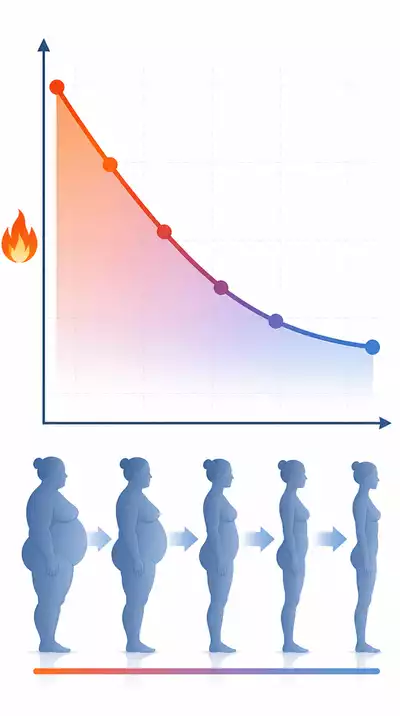
Defining Metabolic Adaptation
Your body becomes more efficient at using energy as you lose weight, lowering your metabolic rate to conserve energy.
- Energy efficiency increases
- Hormonal shifts occur
- Adaptive thermogenesis reduces energy expenditure
What if the key to overcoming weight loss plateaus lies in understanding your body's metabolic responses? This article dives into the science of metabolic adaptation and offers insights that can transform your weight loss journey.
Understanding how your body adjusts to dieting is crucial for sustainable weight management. This visual highlights key aspects of metabolic adaptation and how they impact your weight loss journey.
Your body becomes more efficient at using energy as you lose weight, lowering your metabolic rate to conserve energy.
Resting Metabolic Rate (RMR) often declines with weight loss, meaning your body needs fewer calories.
Leptin (satiety) decreases and Ghrelin (hunger) increases, stimulating appetite and cravings.
Patience, persistence, and evidence-based approaches are vital for long-term success.
Have you ever hit a weight loss plateau and wondered why your progress has stalled? Metabolic adaptation is a key concept that explains this phenomenon. It refers to the body’s ability to adjust its metabolism in response to changes in diet and weight. By understanding metabolic adaptation, we can better navigate our weight loss journeys and achieve sustainable results. At Fasting Mechanics, we aim to demystify these scientific principles for everyone.
In simple terms, metabolic adaptation is the process by which your body becomes more efficient at using energy. When you lose weight, your body perceives this change as a potential threat to its survival. To counteract this, it adapts by lowering your metabolic rate, making it harder to continue losing weight. This can be frustrating, especially after you’ve put in so much hard work! For more on this, check out our article on hormones, fasting, and weight loss.
Understanding these adaptations is essential for anyone looking to maintain their weight loss. This knowledge empowers you to make informed decisions about your diet and exercise habits.
Adaptive thermogenesis plays a significant role in metabolic adaptation. As you lose weight, your body responds by reducing energy expenditure to maintain its weight. This process can be particularly pronounced in individuals who follow very low-calorie diets. To combat this effect, it’s crucial to incorporate periods of increased caloric intake, such as diet breaks, to reset your metabolism.
Research supports the idea that cycling between caloric deficits and surpluses can help mitigate the effects of metabolic adaptation. This strategy can enhance long-term weight management and promote better metabolic health.
Your Resting Metabolic Rate (RMR) is the number of calories your body needs to maintain basic physiological functions while at rest. As you lose weight, your RMR often decreases. This means that your body now requires fewer calories, which can lead to the frustration of hitting a plateau. Recognizing this decline is key to adjusting your nutritional strategies.
By being aware of these factors, you can tailor your approach to weight loss, ensuring that you continue to see progress.
When you embark on a weight loss journey, hormonal changes also play a crucial role. As your body loses weight, hormones like leptin (which helps regulate hunger) and ghrelin (which stimulates appetite) can fluctuate. These shifts can lead to increased hunger and cravings, making it harder to maintain a caloric deficit. To delve deeper into how these hormones affect your hunger, read our article on fasting and hunger hormones explained.
Understanding how these hormones influence your appetite can help you develop strategies to manage cravings effectively. Consider incorporating nutrient-dense foods during your feeding windows to help keep hunger at bay!
Leptin and ghrelin are often called the “hunger hormones.” As weight decreases, leptin levels drop, signaling your brain to increase appetite. On the flip side, ghrelin levels may rise, enhancing feelings of hunger. This hormonal tug-of-war can be disheartening, but it’s essential to stay informed and proactive.
By taking these steps, you can help maintain a sense of balance, keeping hunger in check as you pursue your health goals.
To effectively combat metabolic adaptation, consider implementing diet breaks into your weight loss strategy. Research suggests that cycling between caloric deficits and surpluses can help reset your metabolism, making it easier to continue your weight loss journey. Incorporating periods of increased caloric intake can provide your body with the necessary fuel to overcome plateaus and enhance long-term success.
As we wrap up our exploration of metabolic adaptation and fasting, it's crucial to reflect on the key insights that can guide your weight loss journey. Understanding how your body reacts to dietary changes and the science behind weight loss plateaus can empower you to make informed decisions. Remember, knowledge is the key to sustainable health practices!
First and foremost, patience and persistence are essential. Weight loss is not a linear process; it often comes with ups and downs. By recognizing this, you can better manage expectations and stay committed to your goals.
From my experience at Fasting Mechanics, I’ve seen how individuals who understand these concepts often achieve better results. It’s not just about the numbers on the scale; it's about the overall health journey you're undertaking.
Using evidence-based approaches helps ensure that your weight management strategies are effective. Engaging with scientific research allows you to make choices that are not only beneficial but also sustainable. With proper knowledge, you can navigate through challenges with confidence! Discover more about this in our discussion on fasting myths and evidence-based insights.
In the realm of weight loss, patience can be your best friend. Remember that achieving lasting results takes time. It's important to celebrate small victories along the way, as these contribute to your overall success.
Moreover, persistence is key. If you're faced with a plateau, it’s not the end of the road! Often, a slight adjustment in your fasting routine or nutritional intake can reignite your progress.
At Fasting Mechanics, we emphasize the significance of basing your health choices on strong research. Adopting strategies that are supported by scientific evidence helps you stay on track and make decisions that promote your well-being.
Consider keeping a journal to document your experiences, which can provide insights into what works best for you over time.
Ultimately, energy balance plays a critical role in maintaining your weight loss achievements. It's about finding that sweet spot where your caloric intake aligns with your expenditure, allowing your body to function optimally.
As you continue your journey, remember that small adjustments can lead to significant changes in energy balance. Focus on nourishing your body while also enjoying the process!
As you move forward, I encourage you to embrace changes that feel right for you. Every individual’s body is unique, and what works for one may not work for another. Customizing your approach can lead to more satisfying and sustainable results.
Setting realistic expectations is essential; don’t compare your journey to others. Instead, focus on your progress and what feels right for your body!
Incorporating flexibility into your weight loss plan can make a world of difference. This adaptability is a theme we emphasize at Fasting Mechanics—after all, health is not a one-size-fits-all approach!
Don’t hesitate to reach out for support! Engaging with communities or resources that focus on fasting and metabolic health can provide motivation and valuable insights. At Fasting Mechanics, we strive to equip you with the information and tools you need to succeed.
Whether it’s through our articles, research studies, or community discussions, there’s always something to learn that can help propel you forward!
Finally, let’s not forget the myriad of health benefits that fasting can offer beyond just weight loss. Many individuals report improved mental clarity, better energy levels, and enhanced metabolic health. It’s an exciting time to explore the science of fasting and how it can enhance your overall well-being.
So, what are you waiting for? Dive into these practices and embrace the journey toward better health and sustainable results!
Here is a quick recap of the important points discussed in the article:
Dr. Avery R. Lawson is an independent health researcher dedicated to making complex metabolic and nutrition science accessible. With a focus on the physiological effects of fasting, she interprets and communicates research findings to empower individuals in their health journeys. Through evidence-based insights, Dr. Lawson aims to demystify weight loss and promote sustainable wellness practices at Fasting Mechanics.