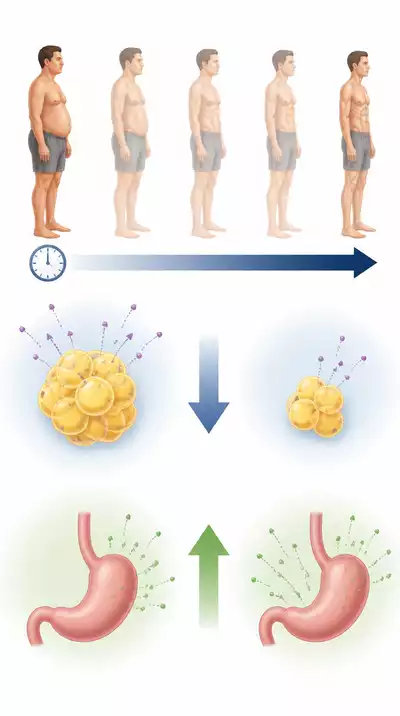
Leptin Levels Decline
Mechanism: Signals depleted energy stores to the brain.
Impact: Increases hunger and cravings.
Action: Be mindful of body signals.
Consider this: During prolonged fasting, your body’s hormonal landscape shifts dramatically, impacting everything from your hunger to your metabolism. Understanding these changes can be the key to maximizing your fasting experience.
This visual summarizes the key hormonal changes and their impact on appetite and metabolism during prolonged fasting, highlighting the intricate mechanisms at play. For a deeper dive into how these hormonal shifts affect your body's energy regulation, explore hormones, fasting, and weight loss.
Mechanism: Signals depleted energy stores to the brain.
Impact: Increases hunger and cravings.
Action: Be mindful of body signals.
Mechanism: Amplifies sensation of hunger, even without meals.
Impact: Stronger hunger pangs.
Action: Manage with hydration & mindful eating.
Mechanism: Promotes utilization of stored fat for energy.
Impact: Enhanced fat burning.
Action: Supports metabolic flexibility.
Mechanism: Aids in fat mobilization and muscle preservation.
Impact: Supports body composition during fasting.
Action: Preserves lean mass.
Mechanism: Body's stress response to prolonged fasting.
Impact: Can influence appetite, potentially leading to cravings.
Action: Incorporate stress management techniques.
When we embark on a prolonged fast, our bodies undergo remarkable hormonal changes that play a crucial role in how we experience hunger and energy. It's fascinating to think about how our hormones adjust during these periods of abstaining from food. Understanding these changes can empower you to make informed choices in your fasting journey, allowing for better control over weight loss and metabolic health.
At Fasting Mechanics, I believe that knowledge is key. By demystifying the hormonal shifts that occur during fasting, I hope to equip you with the insights needed to navigate this empowering process more effectively.
Prolonged fasting typically refers to abstaining from caloric intake for more than 24 hours. This can lead to various physiological adaptations that can enhance fat burning and metabolic health. It's important to recognize that while fasting can offer significant benefits, it may also pose challenges, especially if not approached correctly.
Understanding the implications of prolonged fasting helps clarify its effects. This isn’t just about skipping meals; it’s about how our bodies adapt over time, influencing not only physical health but the entire hormonal landscape. To learn more about how your body utilizes fat for energy during fasting, check out understanding fasting and fat burning.
Several key hormones play pivotal roles in regulating our hunger and metabolism during fasting, including:
By grasping how these hormones function, you can better appreciate the complex interplay of fasting and your body's response to it. The insights gained can guide your fasting strategy, making it not just manageable but also enjoyable!
During prolonged fasting, leptin levels typically decline. This reduction can significantly impact appetite regulation. Lower leptin signals your brain that energy stores are depleted, which may increase hunger and cravings. Understanding this mechanism is essential for managing your hunger effectively during extended fasts.
It’s a classic push-and-pull scenario: while fasting may promote fat loss, decreased leptin can trigger increased appetite. This is why being mindful of your body's signals becomes crucial!
In contrast to leptin, ghrelin levels can increase during fasting periods. This increase often leads to an amplified sensation of hunger. Research suggests that the rise in ghrelin can occur even in the absence of meals, reminding us that our bodies can still react to perceived energy deficits.
Managing ghrelin levels through hydration and mindful eating strategies during your feeding window can help mitigate those hunger pangs. Consider how these hormonal changes might affect your fasting experience!
While ghrelin and leptin are prominent, other hormones also have significant roles. Insulin, for instance, decreases during fasting, promoting fat utilization. Adiponectin, which enhances lipid metabolism, tends to increase, promoting further fat loss. Additionally, growth hormone levels rise during fasting, aiding in fat mobilization and muscle preservation.
These hormonal shifts collectively work to create an environment conducive to fat burning. Embracing these changes can turn fasting into a more effective tool for your health journey. To dive deeper into the science behind this, explore fasting and fatty acid oxidation.
Cortisol, the body’s primary stress hormone, can increase during prolonged fasting. Elevated cortisol levels can influence metabolism and appetite, sometimes leading to increased cravings and stress eating. It's essential to acknowledge this aspect of fasting, as stress management techniques can help maintain hormonal balance.
Incorporating relaxation practices, such as meditation or deep breathing exercises, can support your hormonal health during fasting—keeping stress at bay while you work towards your wellness goals!
To enhance your fasting experience, consider incorporating hydration strategies during your fasting period. Drinking water, herbal teas, or electrolytes can help manage hunger pangs and maintain energy levels, making your fast more comfortable and effective.
As we’ve explored the intricate relationship between fasting and hormonal changes, it’s evident that understanding these dynamics is crucial for anyone considering fasting as part of their health journey. The hormonal shifts during fasting are not just background noise; they play a critical role in how our bodies respond to hunger, satiety, and even energy utilization. By grasping these changes, we can better navigate our fasting strategies and maximize their benefits.
In summary, here are some key points to keep in mind about hormonal adaptations during prolonged fasting:
Equipped with this knowledge, you can better tailor your fasting approach to suit your personal health goals. Whether your focus is weight loss, metabolic health, or even just improving your overall well-being, being informed about these hormonal impacts allows for a more strategic plan.
Having a clear grasp of how hormones fluctuate during fasting is essential for anyone looking to adopt this practice. With the right information, it becomes easier to recognize how fasting affects your body and what adjustments might be necessary for optimal results. This understanding empowers you to make informed decisions about when and how long to fast, leading to a more effective and sustainable practice.
As you embark on or continue your fasting journey, consider how these hormonal changes can inform your choices. For instance, if you notice increased hunger during a certain phase, it may be beneficial to adjust the fasting duration or approach.
Utilizing this hormonal insight can enhance your fasting experience significantly. Here are a few strategies to consider:
With these strategies in mind, you'll feel more empowered to tackle fasting with confidence. Each individual is unique, so tailor these insights to your personal journey for the best results!
At Fasting Mechanics, we believe that education is key to making informed health choices. To help you dive deeper into the fascinating world of fasting and hormonal interactions, here are some recommended resources:
These resources can serve as a great foundation for your understanding and implementation of fasting in your life, making it a more enriching experience.
We’d love to hear from you! Sharing your experiences can create a supportive community and enrich our collective knowledge about fasting. What challenges have you faced? What strategies have worked for you? Jump into the comments or reach out to us at Fasting Mechanics to discuss your journey. Together, we can continue to learn and grow in our understanding of fasting and its hormonal effects!
Here is a quick recap of the important points discussed in the article:
Dr. Avery R. Lawson is an independent health researcher dedicated to making complex metabolic and nutrition science accessible. With a focus on the physiological effects of fasting, she interprets and communicates research findings to empower individuals in their health journeys. Through evidence-based insights, Dr. Lawson aims to demystify weight loss and promote sustainable wellness practices at Fasting Mechanics.